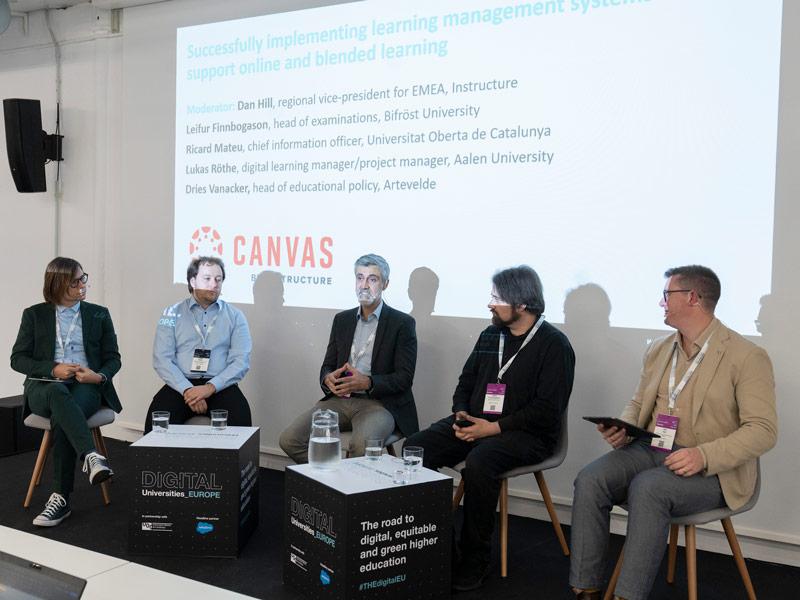
Strategic insight and guidance to assist higher education institutions in leveraging the benefits of technology – from artificial intelligence to campus infrastructure
Strategic insight and guidance to assist higher education institutions in leveraging the benefits of technology – from artificial intelligence to campus infrastructure
Learning to use artificial intelligence effectively and responsibly is essential, but it is not enough. Educators should also prepare students to question, influence and shape the future of AI. Find out how
An artificial intelligence voice-cloning feature can make video content production more time efficient, responsive and agile. This guide offers a practical, ethical road map for replicating instructor audio
Learn how to use digital tools to solve accessibility issues with online learning materials at the source. Iliria Stenning and Paul Vrbik discuss a pilot programme to improve accessibility using tools such as Blackboard Ally
As AI continually outpaces strategy, institutions need to prioritise a strong technology foundation, purpose-built AI and lifelong learning to succeed in the future
With online and blended learning now standard practice in higher education, institutions must implement effective learning management systems to support students
The University of Birmingham has successfully evolved its approach to digital learning since the pandemic, creating greater consistency in how staff use technology to support teaching
Well-designed assessments can highlight generative AI’s limitations, where it can provide support and what responsible practice looks like. Andrew Firr and Alex Fenton offer strategies