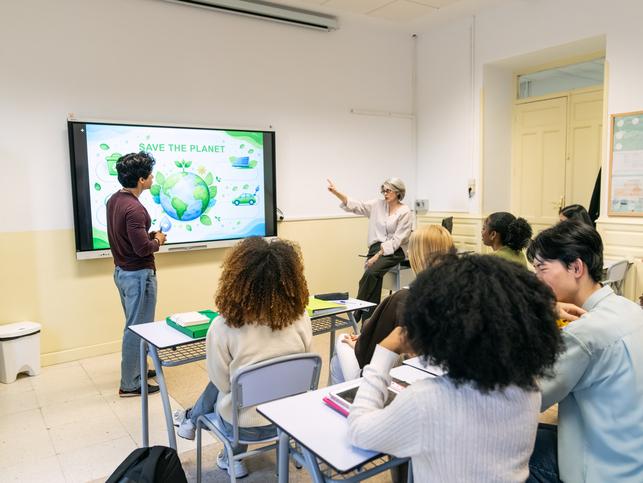
Strategies to empower students to engage with climate issues in ways that are relevant to their discipline, their futures and the world they are entering
How can education truly prepare students for the unpredictability of the working world? Find three ways to encourage students to develop the skills they’ll need
When educators restrict an AI model to a defined collection of trusted inputs, they can introduce students to academic materials in a flexible and interactive way. Here, Imran Khan shares five practical insights
Intercultural online projects work best when designed around learning journeys with multiple pathways for participation. Read guidance on fostering connection, trust and engagement
With AI becoming commonplace in nearly every industry, educators need to intentionally integrate AI into the learning process. Here’s how to do it, ethically and transparently
If we want universities to address society’s greatest challenges, we should ask ourselves how our work makes the world better in tangible, measurable ways. Bobby Vance explains how this question has shaped his career
Industries are being shaped by AI, climate change and demographic and geopolitical shifts. We must redesign curricula to better prepare graduates, says Kathryn Woods
GenAI does not make lecturers redundant, but it does weaken one-way content delivery as a reason to bring students together, writes Debra Page. She shares four practical shifts to teaching in the age of AI
Online teaching works best when teaching, facilitation and technical delivery are treated as complementary professional roles. Read guidance on studio-based delivery