
While skills education has become a central requirement of many courses, the skills that are required from graduates can vary in response to new technologies and local market trends.
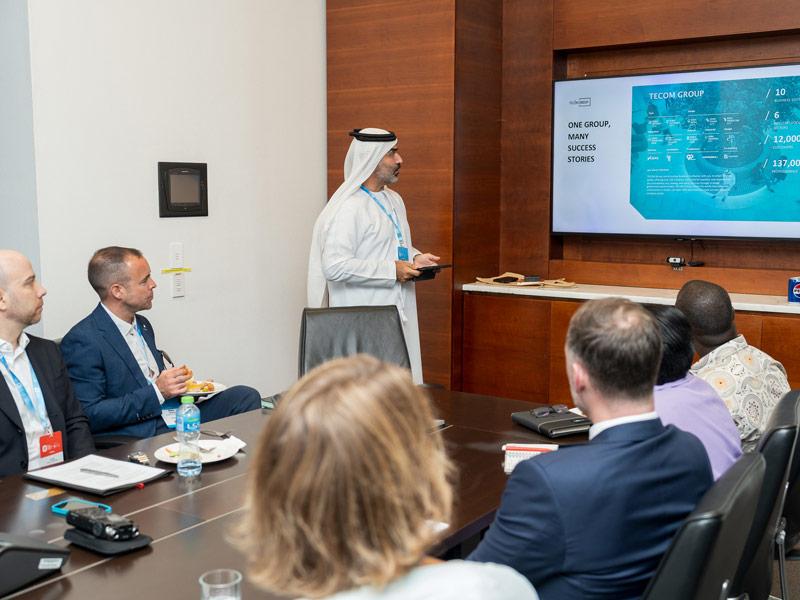
Transnational education (TNE) enables universities to align industry and academia to create career-ready international graduates. During the 2025 THE World Academic Summit, a round-table discussion held in partnership with Dubai International Academic City and Dubai Knowledge Park – which together comprise the education cluster of TECOM Group – brought together experts from the global higher education sector to discuss how TNE helps to broaden students’ perspectives and facilitate cross-cultural understanding, enhancing their employability.
TNE can take many forms, including international campus branches, dual-degree programmes and virtual courses. Students from different regions of the world are seeking new opportunities for TNE, said Marwan Abdulaziz Janahi, senior vice-president of Dubai International Academic City, Dubai Knowledge Park and Dubai Science Park, part of TECOM Group.
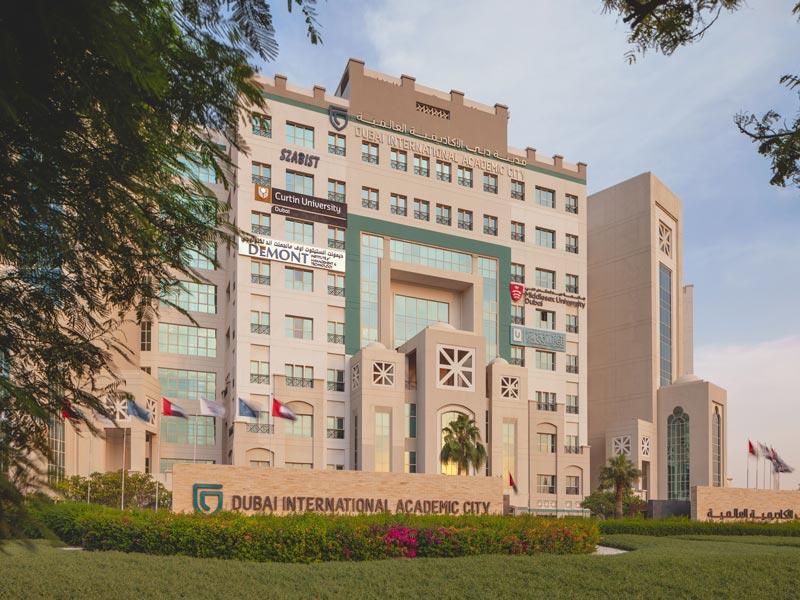
Dubai International Academic City and Dubai Knowledge Park offer sector-specific physical infrastructure and vibrant intellectual ecosystems, where leading universities, training institutes, researchers, start-ups and multinational corporations can collaborate. The two ecosystems are home to over 85 per cent of students enrolled in private higher education institutions in Dubai. They have built a strong TNE component within the campuses through collaborations with institutions such as the University of Birmingham in the UK, Janahi said.
Jie Chen, director of the Office of International Affairs at Huazhong University of Science and Technology in China, said that the graduates from its TNE programmes have the highest rate of employability within the university. Chen’s institution has TNE collaborations with several universities around the world. “It is not only about combining the strength of two universities,” she said. “It is about integration.”
“Cultural intelligence is important for students of the future,” said Jane Robinson, pro vice-chancellor of Newcastle University in the UK. “Students value the mobility and opportunity to experience different places [through TNE].”
Students are not the only ones who benefit from TNE, said Address Mauakowa Malata, vice-chancellor of Malawi University of Science and Technology. TNE programmes foster collaboration between the academics, solidifying the partnership between institutions. It enables educators to explore cross-cultural engagement and learn from each other.
Learners are increasingly looking at countries such as the UAE for higher education, Janahi said. In Dubai, higher education enrolments are estimated to increase more than 40 per cent by 2030, according to the 2025 white paper, titled Future Skills and the Workforce of Tomorrow, published in collaboration between Dubai International Academic City, Dubai Knowledge Park and THE.
However, it is important for TNE offerings to be locally relevant and collaborate with the wider academic and local community, the round-table participants said. “The institutions that have taken off in a big way and are expanding constantly are those that also have a vested interest to be in the region and to invest in the region,” said Maryke Luijendijk-Steenkamp, executive director at Neohorizon School of Business in the UAE.
“Institutions need to diversify their TNE toolkits to be able to adapt to shifts in the geopolitical landscape and wider economic trends,” said Kyle Long, president of the American University in Dubai. For institutions that do not have the resources to launch large TNE programmes, options such as collaborative online international learning and virtual exchanges can be a productive way to start their TNE journey.
Explore TECOM Group’s education cluster, Dubai International Academic City and Dubai Knowledge Park.

comment