


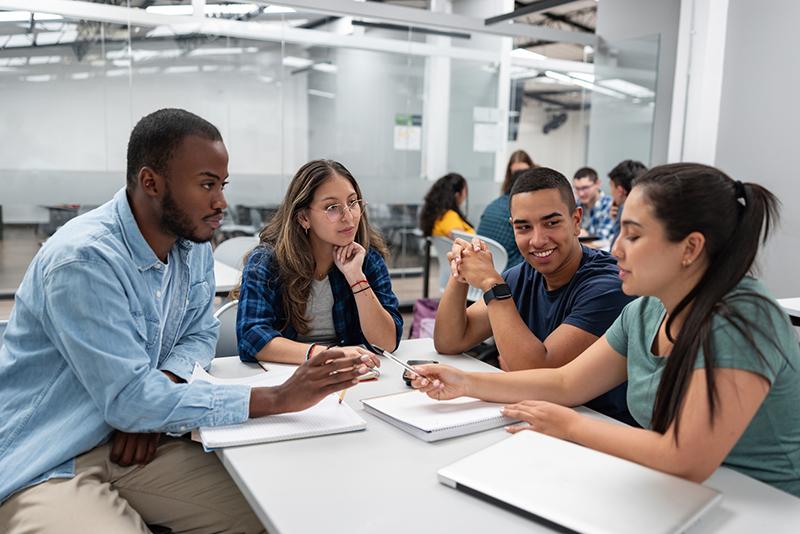
Adapting teaching for diverse learners is often framed as an additional burden on already stretched workloads, but international classrooms are not simply something to manage. They also reshape discussion, broaden perspectives and better reflect the global contexts students are preparing to enter. The challenge for educators, then, is less about changing content, and more about making the structures of learning visible, navigable and inclusive for all students.
Below are practical tips that can help support international students while also improving the learning experience for the whole class. These suggestions come from a study with staff and students at a UK university exploring teaching and learning practices in diverse classrooms.
1. Make expectations explicit and visible
International students are often expected to adapt quickly to academic norms that are rarely explicitly taught. These challenges can lead to misinterpretation of performance and can affect students’ confidence, participation and sense of belonging.
To help with this, educators should make expectations clear and direct. This includes aspects such as attendance, how students should take part in class and what “good engagement” looks like. Students cannot be assumed to already know the unwritten rules, and expectations should be discussed early and repeated throughout the course.
Practical strategies include:
- clearly explaining assessment criteria and expectations
- showing examples of good academic work
- using examples to explain standards
- repeating and summarising key points
- avoiding jargon or complex language where possible
- clearly explaining academic integrity procedures.
Allowing space at the end of sessions to check understanding can help make expectations more transparent and accessible. Making expectations explicit is not about lowering standards but about ensuring those standards are accessible to all students.
2. Embed international perspectives in the curriculum
Much of UK higher education is based on Western ways of thinking, but students benefit from exposure to ideas from different parts of the world. When curricula draw too heavily on one cultural or regional perspective, students may struggle to see themselves reflected in what they are taught. Embedding international perspectives is therefore not only about engagement and inclusion, but also about strengthening critical thinking and applied understanding.
Educators can do this by:
- including case studies from different countries and cultural contexts
- using research and examples from outside Western settings
- encouraging students to apply theories to their own cultural or national contexts
- designing activities that allow comparison of global perspectives
- integrating flexibility in how students connect theory to their experience.
Introducing diversity in this way allows students to engage more meaningfully with content and reduces the risk of a student feeling that the university experience is not designed for them. It also helps create a sense of relevance between academic knowledge and real-world application.
Curriculum internationalisation is not about adding isolated examples, but about embedding multiple perspectives so that whose knowledge counts is not assumed in advance.
Educators can also invite students to share their own experiences, although this needs to be done carefully. Students should not be placed in a position where they feel they are expected to represent an entire culture or speak on behalf of a country. There is also a risk that such activities can reinforce stereotypes or rely on cultural assumptions, which may leave students feeling marginalised or uncomfortable.
3. Provide support with English
Spoken and written English can present significant challenges for international students. Accents, academic terminology and discipline-specific language can make it difficult to follow lectures, participate in discussions and engage fully with learning materials. Even students who meet formal English-language entry requirements may struggle with the speed and density of academic communication, particularly in their early months at university.
- Rethinking course design to enliven student engagement
- Make multiculturalism an enriching learning experience
- Spotlight guide: Support student success in the multilingual classroom
Support with English language and academic writing remains essential, not just for academic performance but also to enable confidence, participation and a sense of belonging within the classroom.
4. Design inclusive group work
Group work can support learning in diverse classrooms, especially when students from different backgrounds are deliberately mixed. Students often choose to work with others who share similar language or cultural backgrounds, which is understandable and can help them feel comfortable. In line with this, academics in our study had mixed views, with some believing that students should work with whomever they prefer, while others suggested that well-planned diverse groups can help students learn more from each other and develop a wider range of skills across the class.
Benefits of mixed group work include:
- exposure to different academic approaches and perspectives
- development of cross-cultural communication skills
- opportunities to improve conversational academic English
- broader understanding of global viewpoints.
In addition to improving language skills, working in groups with people from different cultures helps students learn how to collaborate, communicate and understand different perspectives. The key is to ensure group work is intentionally designed and supported, rather than left to chance.
5. Reduce power distance between lecturer and student
A positive teaching environment in itself can have as significant an effect on student learning as more tangible teaching practices. Reducing perceived power imbalances, introducing a more open and informal classroom atmosphere and encouraging honest dialogue can help students feel more comfortable participating and engaging with both staff and peers.
Small changes can make a meaningful difference. These include:
- encouraging open dialogue and questions
- introducing informal or low-stakes discussion activities
- creating structured opportunities for peer interaction.
Beyond these approaches, creating space for students to contribute without fear of judgement is also important. For example, normalise not knowing. Model this yourself by saying things like: “This is a complex idea that often takes time to get used to.” Acknowledge that speaking up, writing and active listening are all valid forms of participation.
In addition to formal teaching, informal opportunities for engagement can also help students feel more connected. Creating a classroom culture where students feel able to speak up, challenge ideas and contribute during teaching can help reduce traditional lecturer-student hierarchies. Small changes in classroom interaction – such as inviting responses – can help reduce perceived distance between staff and students. Informal check-ins at the start or end of class can also give students opportunities to engage.
Supporting international students is not about fundamentally changing academic standards, but about making expectations visible, teaching more explicitly and designing learning environments that include all students. When these practices are embedded consistently, diverse classrooms can become a source of deeper engagement and more meaningful learning, better reflecting the realities students will encounter beyond higher education.
Elida Cena and Gülseli Baysu are both senior lecturers in psychology, and Judith Wylie is director of internationalisation in the School of Psychology, all at Queen’s University Belfast.
If you’d like advice and insight from academics and university staff delivered direct to your inbox each week, sign up for the Campus newsletter.



comment